Have you ever noticed how much personality a single word can carry? In English, “yes” is short and simple, but in Italian, agreeing with someone can sound warm, enthusiastic, or even musical depending on how it is said. If you are learning how to say yes in Italian, you will quickly discover that Italians rarely just say the word on its own. They add tone, gestures, and small variations that make everyday conversation feel more alive. This guide walks you through the meaning, pronunciation, common expressions, and real examples so you can start agreeing like a local.
Meaning and Translation
The most basic and widely used word for yes in Italian is sì. It is a direct translation of “yes” in English and can be used in almost any situation, from answering a simple question to confirming plans. Unlike some other languages that use different words depending on formality, sì stays the same whether you are speaking to a close friend or a stranger. What changes is the tone, the phrase you pair it with, and the context around it.
Pronunciation
Sì is pronounced “see,” similar to the English word “see” as in “I see you.” The vowel sound is short and clean, without any stretching or softening. It is important not to confuse sì with si, which looks identical without the accent mark but functions as a reflexive pronoun in Italian grammar. The accent over the i is what tells you it means yes. When speaking, Italians often say sì with a slight rise in tone to sound friendly and natural rather than flat or robotic.
Common Ways to Say It
While sì is the standard word for yes, Italians use several other expressions depending on the situation and level of enthusiasm:
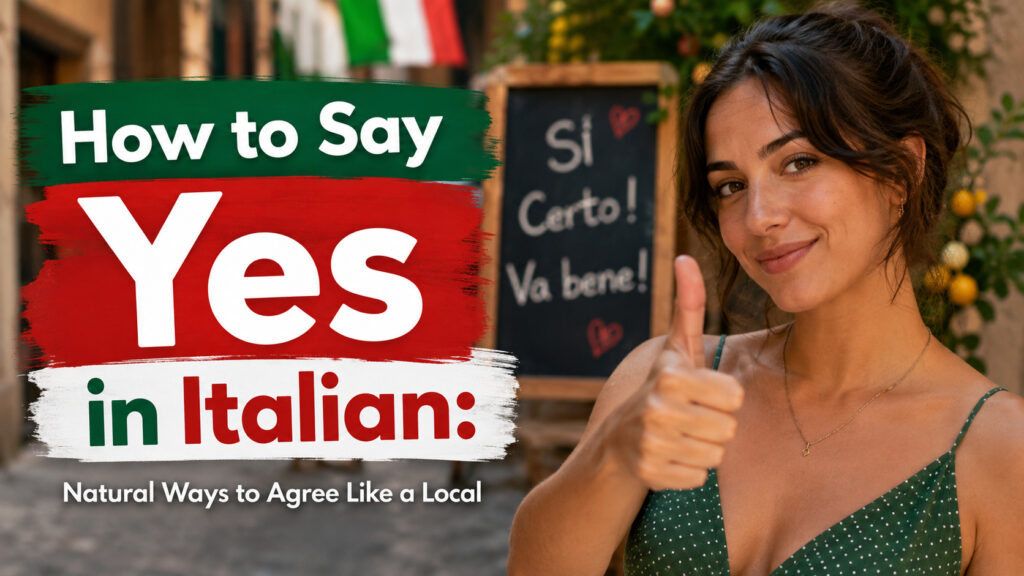
Certo means “of course” and is used to confirm something with confidence.
Esatto means “exactly” and is often used to agree that someone is completely correct.
Va bene means “that works” or “okay,” commonly used when agreeing to plans.
Perfetto means “perfect” and is used as an enthusiastic way to say yes to an idea or suggestion.
Assolutamente means “absolutely” and adds strong emphasis when agreeing with something.
Knowing these variations helps you sound more natural instead of repeating the same word every time you agree with someone.
Formal and Informal Usage
Italian does not have separate formal and informal versions of the word yes itself, but the surrounding language often changes based on who you are speaking to. In formal situations, such as speaking with someone older, a stranger, or in a professional setting, sì is often paired with polite phrases like sì, certamente meaning “yes, certainly,” or sì, va bene così meaning “yes, that is fine.”
In informal situations, such as chatting with friends or family, Italians often shorten their responses or add casual expressions like sì sì, used to reassure someone quickly, or eh sì, which adds a relaxed, conversational tone. The word itself does not change, but the phrasing around it reflects the level of familiarity between speakers.
Related Phrases
Once you are comfortable with the basic word, it helps to know a few related expressions that often appear alongside it:
Non c’è problema meaning “no problem,” often used after agreeing to something.
Con piacere meaning “with pleasure,” used to happily accept an invitation or request.
D’accordo meaning “agreed,” commonly used to confirm a plan or decision.
Ci sto meaning “I am in,” a casual way to agree to join an activity.
These phrases naturally pair with yes and help conversations sound more fluid and complete.
Real-Life Examples with English Translations
Seeing these expressions in real conversation makes them easier to remember. Here are a few short exchanges:
A: Vuoi venire alla festa stasera? (Do you want to come to the party tonight?) B: Sì, con piacere! (Yes, with pleasure!)
A: Hai finito il lavoro? (Have you finished the work?) B: Sì, esatto, ho finito tutto. (Yes, exactly, I finished everything.)
A: Possiamo partire domani mattina? (Can we leave tomorrow morning?) B: Va bene, ci sto. (That works, I am in.)
A: Ti piace questo ristorante? (Do you like this restaurant?) B: Assolutamente, è perfetto. (Absolutely, it is perfect.)
Common Mistakes
Learners often make small but noticeable mistakes when using this word. One common error is confusing sì with si, which changes the meaning of the sentence entirely since one means yes and the other is a grammatical pronoun. Another mistake is repeating sì too often in a single conversation instead of mixing in phrases like certo or va bene, which can make speech sound repetitive. Some learners also forget that tone matters in Italian, so saying sì in a flat or hesitant voice can unintentionally sound unsure rather than confident. Lastly, overusing formal phrasing with friends or family can come across as distant rather than warm and natural.
Final Thoughts
Learning how to say yes in Italian goes beyond memorizing a single word. It involves understanding tone, common expressions, and the small variations Italians use to sound natural and expressive in everyday conversation. By practicing the phrases covered in this guide and paying attention to context, you will be able to agree with confidence, whether you are chatting casually with friends or speaking in a more formal setting.