Have you ever walked into a room and immediately known something needed to be aired out, before you even figured out what the smell was? Describing bad smells is one of those everyday situations that comes up more often than people expect, whether it involves food, laundry, or a pair of old shoes. If you are learning how to say stinky in Spanish, this guide will walk you through the meaning, pronunciation, common variations, and real conversational examples so you can describe smells naturally and accurately.
Meaning and Translation
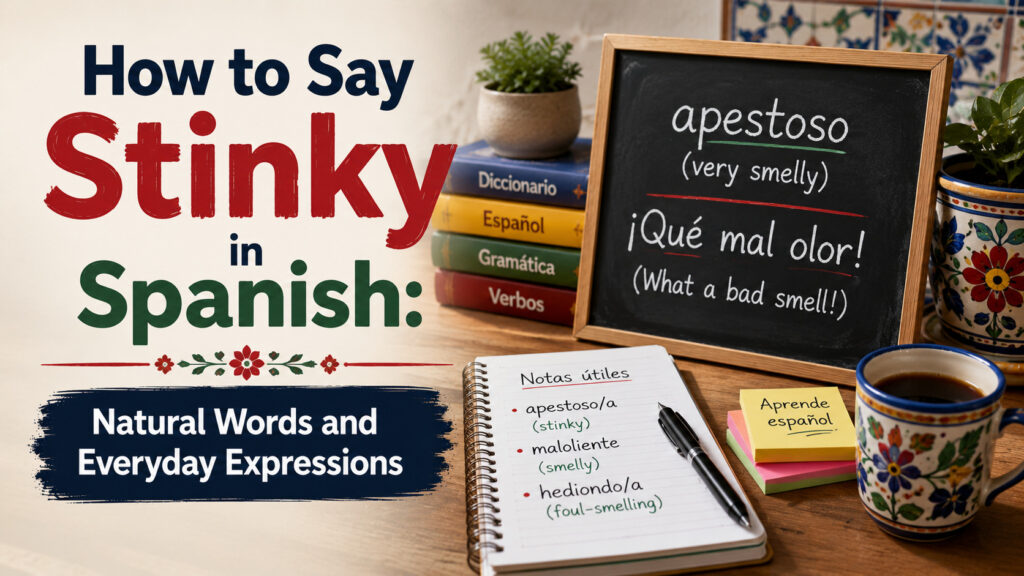
The most common and widely used word for stinky in Spanish is apestoso, used to describe something masculine, and apestosa, used for feminine nouns. This adjective comes from the verb apestar, meaning “to stink” or “to smell bad.” Another commonly used word is maloliente, a more neutral and slightly formal term meaning “bad smelling,” which works the same for both masculine and feminine nouns. While apestoso carries a stronger, more casual tone, maloliente is often used in more descriptive or written contexts.
Pronunciation
Apestoso is pronounced “ah-pehs-TOH-soh,” with the stress falling on the third syllable. The feminine form, apestosa, follows the same pattern, pronounced “ah-pehs-TOH-sah.” Maloliente is pronounced “mah-loh-lee-EHN-teh,” with a clear emphasis on the fourth syllable. Practicing the rhythm of each word slowly before speeding up will help you sound clear and natural, especially since apestoso is a longer word that some learners tend to rush through.
Common Ways to Say It
Beyond the basic words, Spanish offers several expressions to describe bad smells depending on intensity and context:
Huele mal means “it smells bad,” a simple and widely used phrase that works in almost any situation.
Apesta means “it stinks,” used as a direct and casual way to describe something with a strong bad odor.
Huele a rayos is an informal expression meaning “it smells terrible,” literally translating to “it smells like lightning bolts,” used to emphasize just how bad something smells.
Tiene mal olor means “it has a bad smell,” a slightly more descriptive and neutral way to express the same idea.
These variations allow speakers to describe bad smells with different levels of intensity, from a mild observation to a strong complaint.
Formal and Informal Usage
In formal settings, such as professional environments, written descriptions, or polite conversation, maloliente or tiene mal olor are the preferred choices, since they sound more neutral and less blunt. For example, a formal complaint might use the phrase el lugar es maloliente, meaning “the place has a bad smell,” rather than a more casual term.
In informal, everyday conversation, especially among friends or family, apestoso, apesta, and huele mal are extremely common and widely understood. Casual expressions like huele a rayos are typically reserved for relaxed, informal speech, since the exaggerated phrasing would feel out of place in more polite or professional contexts. Choosing between these options often depends on how direct or casual the speaker wants to sound.
Related Phrases
Learning a few related expressions makes it easier to talk about smells naturally in everyday conversation:
Huele bien meaning “it smells good,” the opposite of a bad smell.
Qué olor meaning “what a smell,” used as a quick exclamation when noticing an odor.
Necesita un baño meaning “it needs a bath,” often used humorously about pets or clothing.
Abre la ventana meaning “open the window,” a common response to a bad smell in a room.
These phrases frequently come up alongside expressions of bad odors and help conversations flow naturally in everyday situations.
Real-Life Examples with English Translations
Seeing these words used in real conversation makes them easier to remember and apply correctly. Here are a few examples:
A: ¿Qué es ese olor? (What is that smell?) B: Son mis zapatos, están apestosos. (It’s my shoes, they are stinky.)
A: La basura huele muy mal. (The trash smells very bad.) B: Sí, hay que sacarla ahora. (Yes, we need to take it out now.)
A: El perro necesita un baño. (The dog needs a bath.) B: Sí, apesta mucho. (Yes, it stinks a lot.)
A: Esta habitación es maloliente. (This room has a bad smell.) B: Voy a abrir la ventana. (I am going to open the window.)
Common Mistakes
Learners often make a few predictable mistakes with these words. One common error is forgetting to match the gender of apestoso or apestosa with the noun being described, such as saying el camisa apestoso instead of the correct la camisa apestosa. Another mistake is confusing apestar, meaning “to stink,” with apestado, which relates to being plagued or infected, since the words share a root but carry very different meanings. Some learners also overuse informal expressions like huele a rayos in formal situations, where a more neutral word like maloliente would be more appropriate. Paying attention to gender agreement and context helps these words sound accurate and natural.
Final Thoughts
Learning how to say stinky in Spanish involves more than memorizing a single word. It requires understanding gender agreement, tone, and the range of expressions used to describe bad smells in different situations. By practicing the phrases and examples covered in this guide, you will be able to describe smells naturally and appropriately, whether you are talking casually with friends or describing something in a more neutral, formal way.