Have you ever taken your kids to the zoo, tried to switch into Spanish practice mode, and suddenly blanked on the most basic word of all, the one for “animal” itself? It is one of those words that feels like it should be obvious, and in Spanish, it actually is, since it looks almost identical to English. If you have been searching for how to say animal in Spanish, you are in luck, because this is one of the easiest words to learn and remember. This guide covers the meaning, pronunciation, and natural usage so you can talk about animals with confidence in any Spanish conversation.
Meaning and Translation
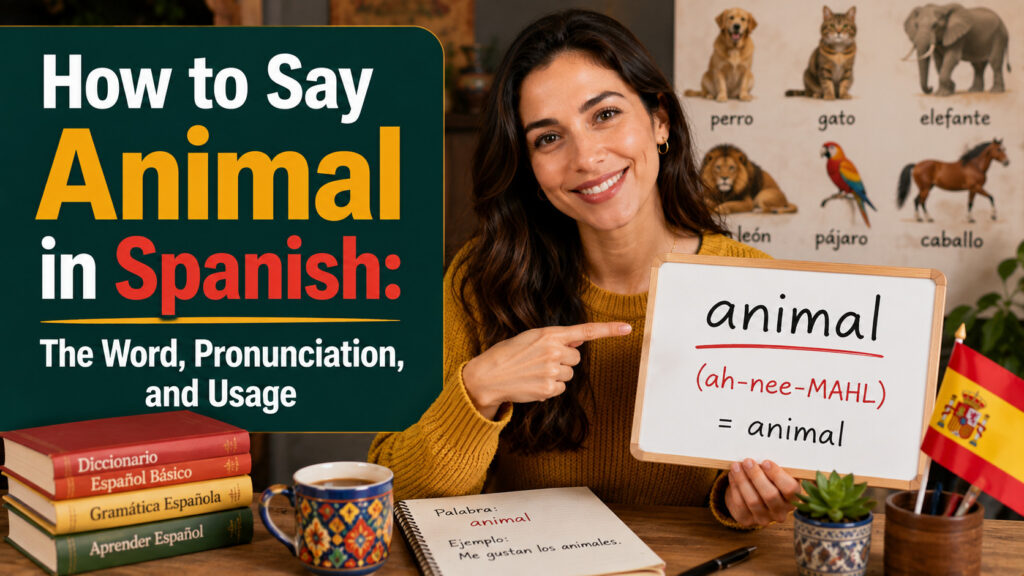
The word for animal in Spanish is animal, spelled exactly the same as in English. This makes it what linguists call a cognate, a word that shares the same spelling and meaning across two languages due to a common root, in this case Latin. The plural form is animales, following the standard Spanish pattern of adding es to words ending in a consonant. Because the spelling matches English so closely, animal is often one of the first words Spanish learners feel confident using right away.
Pronunciation
Even though animal is spelled the same in both languages, the pronunciation is different, and getting it right will help you sound more natural. In Spanish, animal is pronounced ah-nee-MAHL, with the stress falling on the last syllable, unlike the English pronunciation which stresses the first syllable. The plural form, animales, is pronounced ah-nee-MAH-less, with the stress shifting to the second-to-last syllable, following typical Spanish stress patterns for words ending in a vowel or s. Practicing the shift in stress is the key difference to focus on, since the letters themselves are already familiar.
Common Ways to Say It
Spanish uses animal and animales in much the same way English does, but there are a few common variations and related terms worth knowing.
Animal doméstico means “domestic animal” or “pet,” used when referring to animals kept at home.
Animal salvaje means “wild animal,” commonly used when talking about creatures in nature or at a zoo.
Animales de granja means “farm animals,” a useful phrase when discussing livestock like cows, chickens, or pigs.
Reino animal means “animal kingdom,” often used in educational or scientific contexts.
Mundo animal means “animal world,” a phrase frequently seen in documentaries and nature programs.
Formal and Informal Usage
The word animal itself does not change much between formal and informal settings, since it is a neutral, general term used the same way in both casual conversation and academic writing. However, the words paired with it can shift depending on context. In casual conversation, someone might simply say tengo un animal en casa, meaning “I have an animal at home,” referring to a pet. In more formal or scientific contexts, such as a biology class or a nature documentary, phrases like especies animales, meaning “animal species,” or comportamiento animal, meaning “animal behavior,” are more commonly used. The word itself stays consistent, but vocabulary around it becomes more technical in formal settings.
Related Phrases
Beyond the core word animal, several related terms come up often in everyday Spanish conversations about animals.
Mascota means “pet,” a word used more specifically than animal when referring to a companion animal at home.
Perro means “dog” and gato means “cat,” two of the most commonly referenced animals in daily conversation.
¿Qué animal es ese? means “What animal is that?” a natural question when spotting an unfamiliar creature.
Me encantan los animales means “I love animals,” a common phrase for expressing general affection toward animals.
Cuidar a un animal means “to take care of an animal,” useful when discussing pet ownership or responsibility.
Real-Life Examples with English Translations
Seeing these words used in real sentences helps make them easier to remember and apply naturally.
“Mi hijo quiere ver los animales en el zoológico.” translates to “My son wants to see the animals at the zoo.”
“Ese es un animal muy raro.” translates to “That is a very unusual animal.”
“Los animales salvajes viven en la selva.” translates to “Wild animals live in the jungle.”
“Tenemos varios animales de granja en el rancho.” translates to “We have several farm animals on the ranch.”
“El perro es mi animal favorito.” translates to “The dog is my favorite animal.”
Common Mistakes
One common mistake English speakers make is assuming the pronunciation matches English exactly since the spelling is identical, which leads to placing the stress on the wrong syllable. Another mistake is forgetting to adjust the article correctly, saying la animal instead of the correct el animal, since animal is a masculine noun in Spanish regardless of the animal’s actual sex. Learners also sometimes overuse animal when a more specific word like mascota for pet or perro for dog would sound more natural in everyday conversation. Additionally, forgetting to pluralize correctly by saying animals instead of the proper Spanish plural animales is a frequent slip for beginners still adjusting to Spanish grammar rules.
Final Thoughts
Learning how to say animal in Spanish is refreshingly simple thanks to its shared spelling with English, though the pronunciation shift and grammar rules still deserve attention for sounding truly natural. Whether you are talking about pets at home, wildlife at the zoo, or animals on a farm, animal and animales will cover nearly every situation you encounter. With a little practice on stress and article agreement, this easy cognate will quickly become second nature in your Spanish vocabulary.