Have you ever noticed how often the phrase “God bless you” comes up in everyday English, whether after a sneeze, as a farewell, or as a heartfelt thank you? Arabic has its own rich set of expressions for this sentiment, deeply rooted in religious and cultural tradition. Knowing how to say God bless you in Arabic opens the door to warmer, more genuine conversations with Arabic speakers, since blessings are woven into daily life far more often than in English. This guide breaks down the meaning, pronunciation, and natural usage of these heartfelt phrases.
Meaning and Translation
The most direct translation of “God bless you” in Arabic is “الله يباركك” (Allah yubarikuk), which literally means “May God bless you.” Arabic is a language where religious expressions are deeply embedded in daily speech, regardless of the exact context, so blessings like this one carry real weight and sincerity rather than being empty pleasantries. Depending on the situation, Arabic speakers also use “بارك الله فيك” (Barak Allahu feek), which translates more precisely to “May God bless what is within you” or “May God put blessing in you.” Both phrases express warmth, gratitude, or well wishes, and are used interchangeably in many everyday situations.
Pronunciation
Getting the pronunciation right helps the phrase land naturally. “الله يباركك” is pronounced “AL-lah yu-BAH-ri-kuk.” The “Allah” portion is pronounced with a soft, slightly elongated first syllable, similar to how it sounds in the call to prayer. “Yubarikuk” breaks down into four smooth syllables: yu, BAH, ri, kuk, with the stress falling on the second syllable.
The alternative phrase, “بارك الله فيك,” is pronounced “BAH-rak AL-lah FEEK.” Here, “Barak” comes first, followed by “Allah,” and then “feek,” which rhymes with “seek.” Arabic pronunciation can vary slightly by region and dialect, but this standard Modern Standard Arabic pronunciation will be understood across the Arabic-speaking world.
Common Ways to Say It
Arabic offers several natural variations depending on who you are blessing and the context of the moment.
“بارك الله فيك” (Barak Allahu feek) is one of the most common and versatile blessings, often used to thank someone or wish them well after a kind gesture.
“الله يعطيك العافية” (Allah ya’tik al-afiya) literally means “May God give you wellness” and is commonly used to thank someone for their effort or hard work, functioning almost like an appreciative blessing.
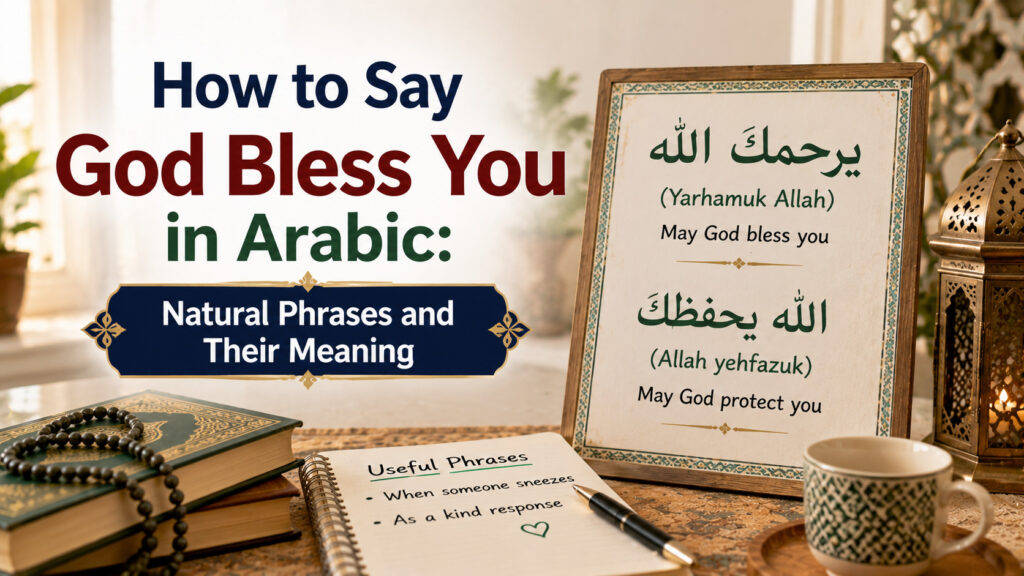
“يرحمك الله” (Yarhamuka Allah) means “May God have mercy on you” and is the traditional phrase said after someone sneezes, similar to how English speakers say “bless you.”
“الله يحفظك” (Allah yahfazak) translates to “May God protect you” and is often used as a warm farewell or a wish for someone’s safety and wellbeing.
Formal and Informal Usage
Arabic blessings shift slightly depending on gender and formality, since Arabic grammar changes verb endings based on whether you are addressing a man or a woman. “Allah yubarikuk” is used when speaking to a male, while “Allah yubarikik” is the version used when speaking to a female.
In formal settings, such as speaking with an elder, a respected community member, or in a professional context, these blessings are entirely appropriate and often expected, since they are seen as expressions of respect and goodwill rather than overly casual language. Informally, close friends and family use these same phrases freely and frequently, sometimes shortening them or saying them quickly as part of natural conversation. Unlike many English expressions that soften in casual speech, Arabic blessings tend to keep their full form even among close friends, since the religious language itself carries importance regardless of setting.
Related Phrases
A few related expressions are useful to know alongside the main blessing phrases.
“إن شاء الله” (In sha Allah) means “God willing” and is used constantly in daily conversation when discussing future plans or hopes.
“الحمد لله” (Alhamdulillah) means “Praise be to God” and is commonly said in response to good news or simply as a general expression of gratitude.
“جزاك الله خيرا” (Jazak Allahu khayran) means “May God reward you with goodness” and is often used as a heartfelt way to say thank you.
“ما شاء الله” (Ma sha Allah) means “God has willed it” and is typically used to express admiration or appreciation, often when complimenting someone.
Real-Life Examples with English Translations
Seeing these phrases used in context makes them easier to remember and apply naturally.
“شكرا جزيلا، بارك الله فيك” translates to “Thank you very much, God bless you,” a common way to express heartfelt gratitude after receiving help.
“الله يعطيك العافية على هذا العمل الرائع” means “May God give you wellness for this wonderful work,” often said to thank someone for a job well done.
“مع السلامة، الله يحفظك” translates to “Goodbye, may God protect you,” a warm farewell used when someone is leaving or traveling.
“عطس صديقي فقلت له يرحمك الله” means “My friend sneezed, so I said to him, may God have mercy on you,” the standard cultural exchange after a sneeze.
Common Mistakes
One common mistake is using the wrong gendered form, saying “yubarikuk” to a woman instead of the correct “yubarikik.” Since Arabic verbs and pronouns change based on gender, this small detail matters for grammatical accuracy.
Another mistake is assuming these blessings are purely religious ceremony rather than natural daily speech. Many learners hesitate to use them, worried they might sound overly formal or out of place, when in reality Arabic speakers use these expressions constantly and warmly in casual conversation.
Learners also sometimes mix up “Yarhamuka Allah,” used after a sneeze, with the general blessing “Barak Allahu feek,” which fits a much wider range of situations. Using the sneeze-specific phrase in the wrong context can sound slightly off to native speakers.
Finally, mispronouncing the guttural and emphatic sounds unique to Arabic, such as the “kh” or emphasized consonants, is common among beginners. Listening to native speakers and practicing slowly will help these sounds become more natural over time.
Final Thoughts
Learning how to say God bless you in Arabic offers a meaningful window into how deeply blessings and well wishes are woven into everyday Arabic conversation. From “Barak Allahu feek” to “Allah yahfazak,” each phrase carries warmth, respect, and sincerity that goes beyond a simple translation. With attention to pronunciation, gender agreement, and context, you can use these expressions naturally and thoughtfully in real conversations with Arabic speakers.