Ever wondered why some Spanish speakers say fútbol while others might use a completely different word depending on where they are from? Soccer is one of the most talked about topics in the Spanish speaking world, and knowing how to say soccer in Spanish correctly can help you follow a match, chat with fans, or simply sound more natural in everyday conversation.
This guide breaks down the meaning, pronunciation, and practical usage of the word so you can talk about the sport with confidence.
Meaning and Translation
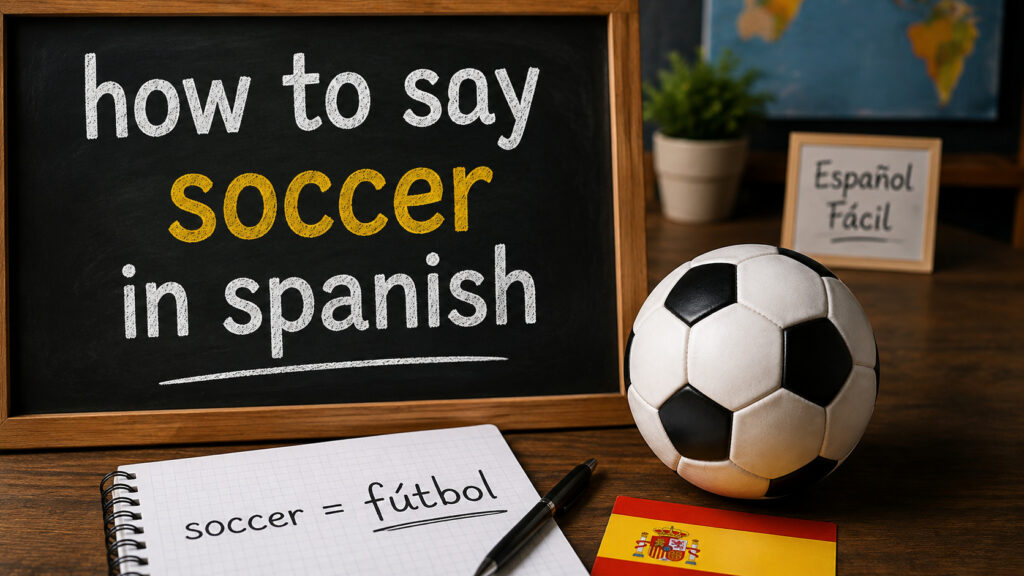
The standard way to say soccer in Spanish is fútbol. This word is a direct adaptation of the English word “football,” borrowed into Spanish when the sport spread internationally in the early twentieth century. In nearly every Spanish speaking country, fútbol refers specifically to the sport known as soccer in the United States and Canada, and football almost everywhere else in the world.
Unlike English, where “soccer” and “football” can refer to different sports depending on the country, Spanish speakers use fútbol universally for the same sport, which makes it a straightforward word to learn.
Pronunciation
Fútbol is pronounced “FOOT-bohl.” The stress falls on the first syllable, marked by the accent on the ú. The “u” sound is a clear, short “oo” like in the English word “foot,” and the second syllable ends with a soft “l” sound.
Spanish pronunciation tends to be consistent and phonetic, meaning words are generally pronounced the way they are spelled. This makes fútbol an easy word to pronounce correctly once you recognize that the stress belongs on the first syllable rather than the second, which is a common mistake for English speakers used to saying “foot-BALL.”
Common Ways to Say It
Fútbol is by far the most common and universally understood term across Spain and Latin America.
El fútbol is often used with the definite article “el” when referring to the sport in general conversation, as in talking about the sport as a whole rather than a specific match.
Balompié is a less common, more formal or poetic alternative used occasionally in Spain, combining balón (ball) and pie (foot). While rarely used in everyday speech, it sometimes appears in official club names or older written contexts.
Fut is a shortened, casual version of fútbol used in relaxed spoken conversation, similar to how English speakers might casually say “footy” or simply “the game.”
Formal and Informal Usage
In both formal and informal settings, fútbol remains the standard word, which makes it beginner friendly since you do not need to switch vocabulary depending on the situation. News broadcasts, official sports commentary, and written articles all use fútbol consistently.
In casual conversation among friends or fans, the shortened form fut is common, especially in Mexico and parts of Latin America, similar to how English speakers shorten words in relaxed speech.
When discussing the sport in an academic, professional, or journalistic context, sticking with the full word fútbol is always appropriate and expected. Balompié, while grammatically correct, is rarely used in modern spoken Spanish and may sound overly formal or old fashioned if used in casual conversation.
Related Phrases
Jugar al fútbol means “to play soccer,” a useful phrase when talking about participating in the sport.
El partido means “the match” or “the game,” commonly used when referring to a specific soccer event.
El equipo means “the team,” essential vocabulary for discussing who is playing.
El balón or la pelota both mean “the ball,” with balón typically used specifically for soccer balls and pelota used more generally for balls in various sports.
Meter un gol means “to score a goal,” a phrase you will frequently hear during match commentary.
Real-Life Examples with English Translations
Me encanta jugar al fútbol los fines de semana. I love playing soccer on weekends.
El partido de fútbol empieza a las ocho. The soccer match starts at eight.
Mi equipo favorito de fútbol es el Real Madrid. My favorite soccer team is Real Madrid.
Vamos a ver el fútbol en la televisión esta noche. We are going to watch soccer on television tonight.
Él metió un gol increíble en el segundo tiempo. He scored an incredible goal in the second half.
Common Mistakes
One common mistake English speakers make is stressing the second syllable, saying “foot-BOHL” instead of the correct “FOOT-bohl.” Paying attention to the accent mark on the ú helps avoid this error.
Another mistake is confusing fútbol with fútbol americano, which specifically refers to American style football. Simply saying fútbol without any qualifier always means soccer in the Spanish speaking world.
Some learners also try to translate “soccer” too literally instead of simply using fútbol, leading to confusion since there is no separate widely used word for the sport played with feet versus other forms of football.
Finally, forgetting the accent mark when writing fútbol is a frequent error. While it may not change spoken pronunciation drastically, it is grammatically important and considered incorrect to omit in written Spanish.
Final Thoughts
Knowing how to say soccer in Spanish with fútbol gives you a simple, reliable word that works in nearly any setting, from casual chats with friends to formal sports commentary. With a few related phrases and an understanding of correct pronunciation, you will be ready to talk about matches, teams, and goals like a true fan. Next time you catch a game, try using these words and phrases to bring your Spanish conversations to life.