Ever walked into a Spanish class or a trip to a Spanish-speaking country and realized “hola” is just the tip of the iceberg? Spanish offers a wide range of greetings that go far beyond the one word most beginners already know. If you are learning how to say hi in Spanish, this guide covers the meaning, pronunciation, and everyday usage of the most common greetings so you can sound natural in any situation.
Meaning and Translation
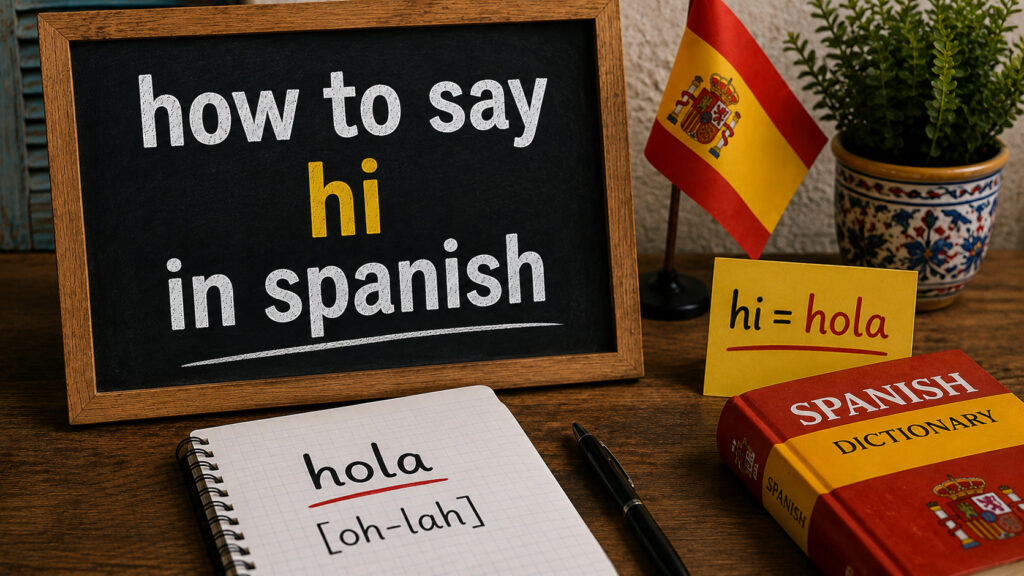
The most well-known way to say hi in Spanish is “Hola” (OH-lah), a simple and universal greeting used across every Spanish-speaking country. Another common casual greeting is “¿Qué tal?” (keh TAHL), which translates loosely to “What’s up?” or “How’s it going?” For a more traditional greeting, Spanish speakers also use “Buenos días” (BWEH-nohs DEE-ahs), meaning “good morning” or “good day,” depending on the time and region.
Pronunciation
Spanish pronunciation tends to be fairly consistent, since most letters are pronounced the way they look. “Hola” is pronounced OH-lah, with the silent “h” at the beginning, a common feature in Spanish. “¿Qué tal?” is pronounced keh TAHL, with the “qu” making a hard “k” sound. “Buenos días” breaks into four syllables, BWEH-nohs DEE-ahs, with clear emphasis on the second syllable of each word. Practicing these sounds slowly will help you build confidence before speaking at a natural pace.
Common Ways to Say It
Beyond “Hola,” Spanish speakers use several other common greetings depending on the setting and time of day. “Buenas tardes” means “good afternoon,” while “Buenas noches” means “good evening” or “good night.” “¿Cómo estás?” translates to “How are you?” and is often used right after an initial hello. In more casual, everyday conversation, especially among younger speakers or in Latin America, “¿Qué onda?” is a popular way to say “What’s up?”
Formal and Informal Usage
Spanish distinguishes clearly between formal and informal speech, and greetings reflect this distinction. “Hola” is neutral and works in almost any setting, making it a safe choice for both casual and semi-formal situations. “¿Qué tal?” and “¿Qué onda?” are informal and best used with friends, peers, or people close to your own age. “Buenos días,” “Buenas tardes,” and “Buenas noches” are more universally polite and often preferred in professional settings, when meeting someone for the first time, or when addressing elders, since they carry a slightly more respectful tone than casual slang greetings.
Related Phrases
A few related phrases can help you continue a conversation naturally after your initial greeting. “¿Cómo te llamas?” means “What is your name?” a common follow-up when meeting someone new. “Mucho gusto” means “nice to meet you,” often used right after an introduction. “Adiós” means “goodbye,” while “Hasta luego” means “see you later,” both useful for wrapping up a conversation. These phrases help round out a simple but complete greeting exchange.
Real-Life Examples with English Translations
Seeing these phrases in context can help you understand how they are used naturally. Here are a few examples:
“Hola, ¿cómo estás?” translates to “Hi, how are you?” a common way to greet a friend or acquaintance.
“Buenos días, mucho gusto en conocerlo.” means “Good morning, nice to meet you,” a polite phrase suitable for a formal introduction.
“¿Qué tal? Todo bien por aquí.” translates to “What’s up? Everything’s good here,” a relaxed, casual exchange between friends.
Common Mistakes
One common mistake learners make is using overly casual greetings like “¿Qué onda?” in formal or professional settings, which can come across as too informal. Another frequent error is mispronouncing the silent “h” in “Hola,” accidentally pronouncing it like the English “h” sound. Learners also sometimes forget that “Buenos días” switches to “Buenas tardes” in the early afternoon, typically after midday, so using the wrong time-based greeting can sound slightly off to native speakers. Paying attention to context and timing will help your Spanish sound more natural.
Final Thoughts
Learning how to say hi in Spanish opens the door to warmer, more natural conversations with Spanish speakers around the world. Whether you rely on the simple and versatile “Hola,” a time-specific greeting like “Buenos días,” or a casual phrase like “¿Qué tal?” among friends, understanding the context behind each option will help you communicate with confidence. With a bit of practice, these greetings will soon feel like second nature in everyday conversation.