Did you know that a simple fruit can have three different names depending on which Spanish-speaking country you are visiting? If you have ever ordered a smoothie in Mexico and then tried the same order in Argentina, you may have noticed the word for banana changes completely. Learning how to say banana in Spanish is a great example of how regional vocabulary shapes everyday conversation, and once you understand the variations, ordering food or chatting about fruit becomes much easier.
Meaning and Translation of Banana in Spanish
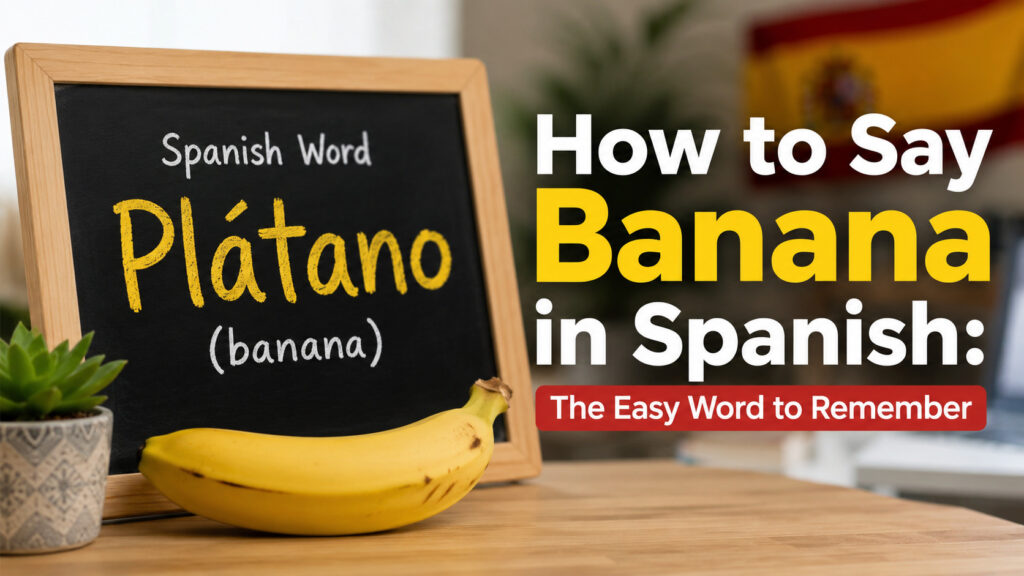
The most common word for banana in Spanish is “plátano.” This word is used widely across Mexico, Spain, and much of Central America. In many Caribbean and South American countries, however, the word “banana” is used instead, borrowed directly from English and Portuguese influence. In parts of the Caribbean, especially the Dominican Republic and Puerto Rico, you may also hear “guineo.” All three words refer to the same yellow fruit, so knowing more than one version helps you communicate no matter where you are.
Pronunciation of Plátano and Banana
Pronunciation is straightforward once broken into syllables.
Plátano is pronounced “PLAH-tah-noh,” with the stress on the first syllable, marked by the accent on the “a.”
Banana is pronounced “bah-NAH-nah,” which sounds very close to the English word, making it one of the easiest Spanish words for beginners to pick up.
Guineo is pronounced “gee-NEH-oh,” with a soft “g” sound similar to the English “g” in “go.”
Practicing these words slowly and then speeding up naturally will help you sound more fluent in everyday conversations.
Common Ways to Say Banana in Spanish
Depending on the country, here are the most common terms you will encounter:
- Plátano – used in Mexico, Spain, and much of Central America
- Banana – used in Argentina, Uruguay, Bolivia, and parts of South America
- Guineo – used in the Dominican Republic, Puerto Rico, and some Caribbean regions
- Cambur – used specifically in Venezuela
Interestingly, in some countries like Mexico, “plátano” can also refer to plantains, so context or the phrase “plátano macho” is sometimes used to specify the starchy cooking variety instead of the sweet fruit.
Formal and Informal Usage
Unlike words that change based on politeness, the words for banana do not shift between formal and informal speech. Instead, the variation is regional rather than social. You would use plátano, banana, or guineo the same way whether speaking to a close friend, a shopkeeper, or a stranger.
That said, if you are traveling, it is helpful to adjust your word choice based on location rather than formality. Using “banana” in Mexico will still be understood, but “plátano” is the more natural and expected term there. Similarly, using “plátano” in Argentina might cause a moment of confusion since “banana” is the standard word in that region.
Related Phrases for Everyday Conversations
Here are a few useful phrases that pair well with the word for banana:
- Un plátano maduro – a ripe banana
- Un plátano verde – a green, unripe banana
- Batido de banana – banana smoothie
- Pan de plátano – banana bread
- Me gusta el plátano – I like bananas
These phrases are useful when shopping at a market, ordering food, or describing your favorite fruits in casual conversation.
Real-Life Examples with English Translations
Seeing these words used in full sentences makes them easier to remember and apply.
“Quiero comprar dos plátanos, por favor.” – “I want to buy two bananas, please.”
“En Argentina, la gente dice banana en vez de plátano.” – “In Argentina, people say banana instead of plátano.”
“¿Tienes guineos maduros?” – “Do you have ripe bananas?”
“Me encanta el batido de banana con leche.” – “I love banana smoothies with milk.”
“El plátano es una fruta muy popular en toda Latinoamérica.” – “Bananas are a very popular fruit throughout Latin America.”
Common Mistakes When Saying Banana in Spanish
Even a simple word like banana can lead to small mix-ups for new learners. Here are a few common ones to avoid.
Assuming one word works everywhere: Many learners memorize only “plátano” or only “banana” and are surprised when locals use a different term. Knowing both makes travel smoother.
Confusing plátano with plantain dishes: In some regions, plátano can refer to both the sweet banana and the starchy plantain used in cooking. Adding “macho” or “para freír” clarifies that you mean the cooking variety.
Mispronouncing the stress: Placing emphasis on the wrong syllable, such as saying “pla-TAH-no” instead of “PLAH-tah-no,” can make the word harder to understand.
Overlooking regional pride: Some speakers feel strongly about their local term, so using guineo in a country where banana is standard might draw a curious look, though it will rarely cause real confusion.
Final Thoughts
Learning how to say banana in Spanish is a simple but revealing lesson in how much vocabulary can shift from one Spanish-speaking country to another. Whether you use plátano, banana, or guineo, understanding the regional differences helps you communicate naturally wherever your travels or conversations take you. With a bit of practice on pronunciation and awareness of local preferences, this small word becomes an easy and memorable addition to your Spanish vocabulary.