Ever wondered how something as simple as starting your day can feel warmer just by using the right words? In many Spanish-speaking cultures, greeting someone with a genuine “good morning” is considered an important social courtesy, not just a formality. If you are learning how to say good morning in Spanish, this guide covers the meaning, pronunciation, and everyday usage so you can start conversations naturally and respectfully.
Meaning and Translation
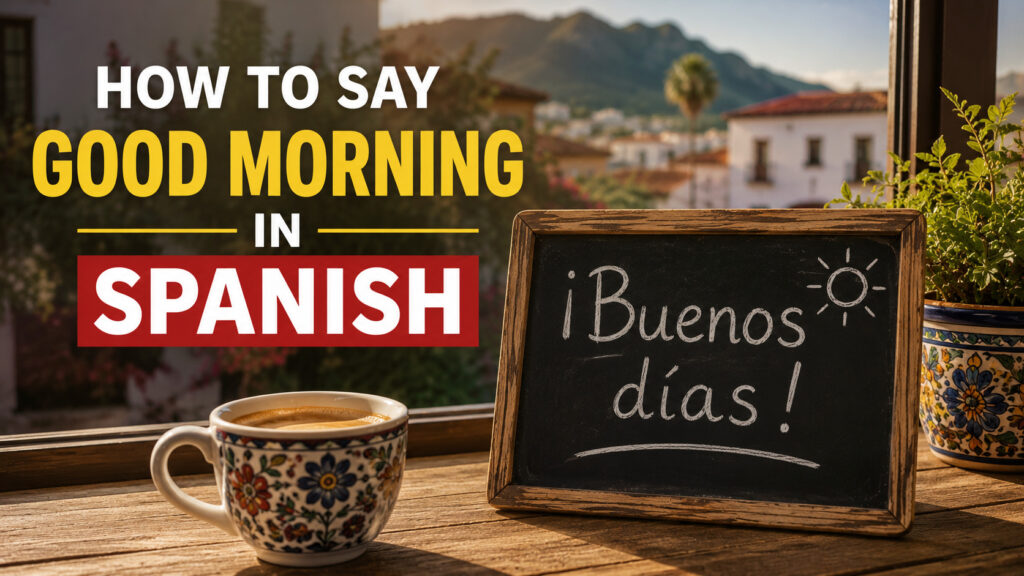
The standard way to say good morning in Spanish is “Buenos días” (BWEH-nohs DEE-ahs). This phrase literally translates to “good days,” using the plural form, which is simply how Spanish expresses this particular greeting. It is used consistently across all Spanish-speaking countries and works well from early morning until around midday, making it one of the most reliable and universally understood greetings you can learn.
Pronunciation
Pronouncing “Buenos días” correctly involves four syllables split across two words: BWEH-nohs DEE-ahs. The “ue” in “Buenos” creates a quick “weh” sound, so it comes out as BWEH-nohs, with stress on the first syllable. “Días” is pronounced DEE-ahs, with the stress on the first syllable as well. Practicing the phrase slowly and then blending the two words together smoothly will help you sound more natural when greeting someone in the morning.
Common Ways to Say It
While “Buenos días” is the standard phrase, Spanish speakers use it in a few different ways depending on the situation. A shortened, more casual version simply says “Buen día” (singular) in some Latin American countries, particularly Argentina and Uruguay, though “Buenos días” remains far more widely used overall. Pairing the greeting with a person’s name, such as “Buenos días, María,” adds warmth and is common in both casual and professional interactions. Some speakers also simply say “Buenos” as an extremely casual shorthand among close friends or family.
Formal and Informal Usage
“Buenos días” works well in both formal and informal settings, making it one of the more versatile greetings in Spanish. In formal contexts, such as greeting a boss, teacher, or someone you have just met, “Buenos días” alone is respectful and appropriate. In more casual settings, speakers often follow it with an informal question like “¿Buenos días! ¿Qué tal dormiste?” meaning “Good morning! How did you sleep?” The phrase itself does not change based on formality, but the follow-up conversation often does, depending on your relationship with the other person.
Related Phrases
A few related expressions can help you build a full morning greeting exchange. “¿Cómo amaneciste?” is a common and culturally specific phrase, roughly meaning “How did you wake up?” or “How are you this morning?” often used in Latin America. “Que tengas un buen día” means “Have a good day,” a friendly phrase used when parting ways in the morning. “Buenas tardes” and “Buenas noches” follow the same pattern for afternoon and evening greetings, rounding out the full set of time-based Spanish greetings.
Real-Life Examples with English Translations
Seeing these phrases in context can help you understand how they are used naturally. Here are a few examples:
“Buenos días, ¿cómo amaneciste?” translates to “Good morning, how did you wake up?” a warm and common greeting used with family or close friends.
“Buenos días, señor Martínez. Espero que tenga un buen día.” means “Good morning, Mr. Martínez. I hope you have a good day,” a polite and formal greeting suitable for a professional setting.
“¡Buenos días a todos! Empecemos la reunión.” translates to “Good morning everyone! Let’s start the meeting,” a common way to open a group setting or workplace gathering.
Common Mistakes
One common mistake learners make is using “Buenos días” too late in the day, forgetting that it typically switches to “Buenas tardes” around midday, generally after 12 p.m. Another mistake is mispronouncing the diphthong in “Buenos,” rushing through the “ue” sound instead of giving it its full, quick blend. Learners also sometimes forget that “días” is plural, mistakenly trying to make it singular, which changes the phrase from the standard and expected form. Paying attention to these small details will help your greeting sound more natural and correctly timed.
Final Thoughts
Learning how to say good morning in Spanish is a simple yet meaningful way to start conversations with warmth and respect. Whether you use the standard “Buenos días” in a formal setting or pair it with a caring follow-up question like “¿Cómo amaneciste?” among friends and family, understanding the context behind this greeting will help you communicate naturally. With just a little practice, this small phrase can help you build genuine connections right from the start of the day.