Have you ever received a birthday message in a language you did not understand and wished you could return the gesture in kind? Arabic is spoken by hundreds of millions of people across the Middle East and North Africa, and learning how to say happy birthday in Arabic is a thoughtful way to celebrate with friends, coworkers, or family who speak the language.
This guide walks you through the meaning, pronunciation, and natural usage of Arabic birthday greetings so you can wish someone well with genuine confidence.
Meaning and Translation
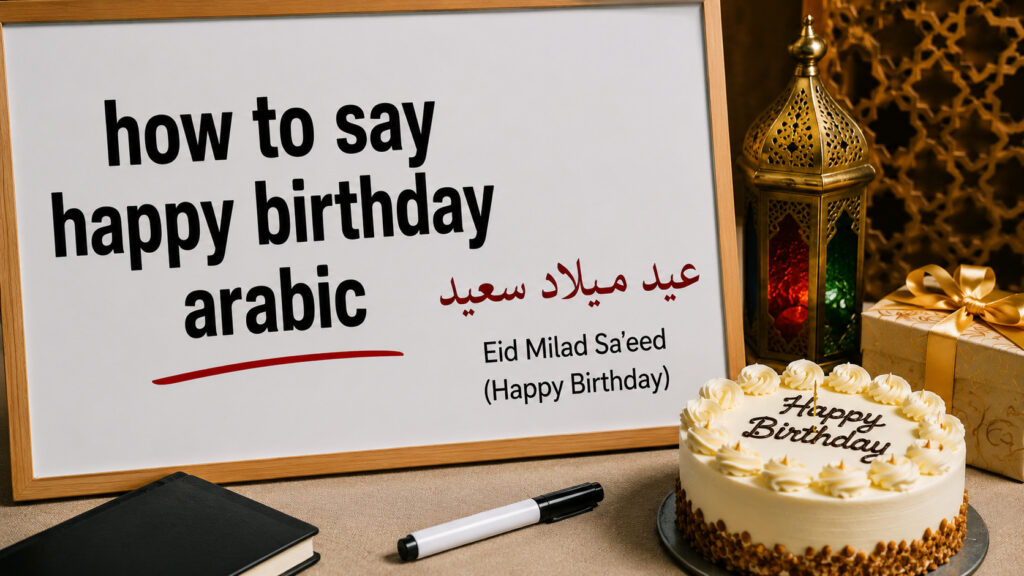
The most common way to say happy birthday in Arabic is عيد ميلاد سعيد (Eid Milad Saeed). This phrase breaks down into three parts. عيد (eid) means “feast” or “celebration,” ميلاد (milad) means “birth” or “birthday,” and سعيد (saeed) means “happy.” Together, the phrase translates literally to “happy birthday celebration,” which naturally means “happy birthday” in English.
This greeting is understood across the Arabic speaking world, though pronunciation and minor phrasing can vary slightly between regions such as Egypt, the Gulf countries, and the Levant, including Lebanon, Syria, and Jordan.
Pronunciation
Eid Milad Saeed is pronounced “eed mee-LAHD sah-EED.” The word eid rhymes with the English word “reed.” Milad is pronounced with stress on the second syllable, “mee-LAHD,” and the “a” sound is long and open. Saeed is pronounced “sah-EED,” with stress on the final syllable.
Arabic contains a few sounds that do not exist in English, but Eid Milad Saeed does not require any particularly difficult sounds, which makes it a beginner friendly phrase to practice. Saying it slowly at first, then gradually speeding up, will help the rhythm feel more natural.
Common Ways to Say It
عيد ميلاد سعيد (Eid Milad Saeed) is the standard, most widely used greeting and works well in almost any Arabic speaking context.
كل سنة وأنت طيب (Kul Sana Wa Enta Tayeb) is a beloved alternative, especially popular in Egypt and the Levant, meaning “every year and you are well.” This phrase is often used interchangeably with the birthday greeting and can also apply to other celebrations, similar to how “many happy returns” works in English. When speaking to a woman, this shifts to كل سنة وأنتِ طيبة (Kul Sana Wa Enti Tayeba).
عقبال ١٠٠ سنة (Aqbal Miyat Sana) means “may you live to one hundred years,” a warm, traditional blessing often added after the main birthday greeting to wish someone a long and happy life.
Formal and Informal Usage
عيد ميلاد سعيد (Eid Milad Saeed) works comfortably in both formal and informal settings, making it a safe and reliable choice whether you are greeting a close friend or a respected elder.
For casual settings among friends, family, or peers, كل سنة وأنت طيب (Kul Sana Wa Enta Tayeb) feels warm and familiar, often used in place of or alongside the standard phrase. It carries a friendly, affectionate tone that fits naturally into everyday conversation.
In more formal or respectful contexts, such as greeting an older relative, a teacher, or someone in a professional setting, sticking with عيد ميلاد سعيد (Eid Milad Saeed) is the more appropriate choice. Adding a respectful title before the person’s name, when applicable, further shows politeness.
Related Phrases
كعكة عيد الميلاد (Ka’akat Eid Al Milad) means “birthday cake.”
هدية (Hadiya) means “gift” or “present.”
أتمنى لك كل التوفيق (Atamanna Laka Kul At Tawfeeq) means “I wish you all the best,” a common addition to birthday messages.
الشموع (Al Shumoo) means “the candles,” often referenced when talking about blowing out birthday candles.
عيد ميلاد مبارك (Eid Milad Mubarak) is another accepted variation meaning “blessed birthday,” using مبارك (mubarak, meaning “blessed”) in place of سعيد (saeed).
Real-Life Examples with English Translations
عيد ميلاد سعيد يا صديقي، أتمنى لك سنة رائعة. (Eid Milad Saeed ya sadiqi, atamanna laka sana ra’e’a.) Happy birthday my friend, I wish you a wonderful year.
كل سنة وأنتِ طيبة يا أختي. (Kul Sana Wa Enti Tayeba ya okhti.) Happy birthday, my sister.
عيد ميلاد سعيد، عقبال ١٠٠ سنة إن شاء الله. (Eid Milad Saeed, aqbal miyat sana in sha Allah.) Happy birthday, may you live to one hundred years, God willing.
هذه هدية عيد ميلادك، عيد ميلاد سعيد. (Hazihi hadiyat eid miladik, eid milad saeed.) This is your birthday gift, happy birthday.
Common Mistakes
One common mistake is mispronouncing سعيد (saeed) by placing the stress on the wrong syllable, which can make the phrase harder to understand. Remembering that the stress falls on the final syllable helps the greeting sound more natural.
Another mistake is using the masculine or feminine form incorrectly, such as saying Kul Sana Wa Enta Tayeb to a woman instead of the correct Kul Sana Wa Enti Tayeba. Arabic distinguishes between masculine and feminine forms in many everyday phrases, so paying attention to who you are speaking to matters.
Some learners also assume there is only one correct birthday phrase in Arabic, when in reality regional variations are common and widely accepted. Using either عيد ميلاد سعيد or كل سنة وأنت طيب will generally be understood and appreciated no matter the dialect.
Finally, avoid translating English birthday idioms word for word, since expressions like “many happy returns” do not carry the same meaning in Arabic. Sticking with the phrases covered above ensures your greeting sounds natural and heartfelt.
Final Thoughts
Learning how to say happy birthday in Arabic is a meaningful way to connect with Arabic speaking friends, family, or colleagues, especially around such a personal celebration. With عيد ميلاد سعيد (Eid Milad Saeed) as your foundation, along with warm additions like كل سنة وأنت طيب (Kul Sana Wa Enta Tayeb), you now have the tools to offer a genuine, culturally appropriate birthday wish. The next time someone in your life celebrates a birthday, try using these phrases and see how much a greeting in their own language can mean.