Ever wondered how to make a birthday message feel more personal instead of just a quick translated greeting? Spanish offers several warm and natural ways to celebrate someone’s special day, each with its own tone and cultural flavor. If you are learning how to say happy birthday in Spanish, this guide covers the meaning, pronunciation, and everyday usage of the most common phrases so you can send a heartfelt message with confidence.
Meaning and Translation
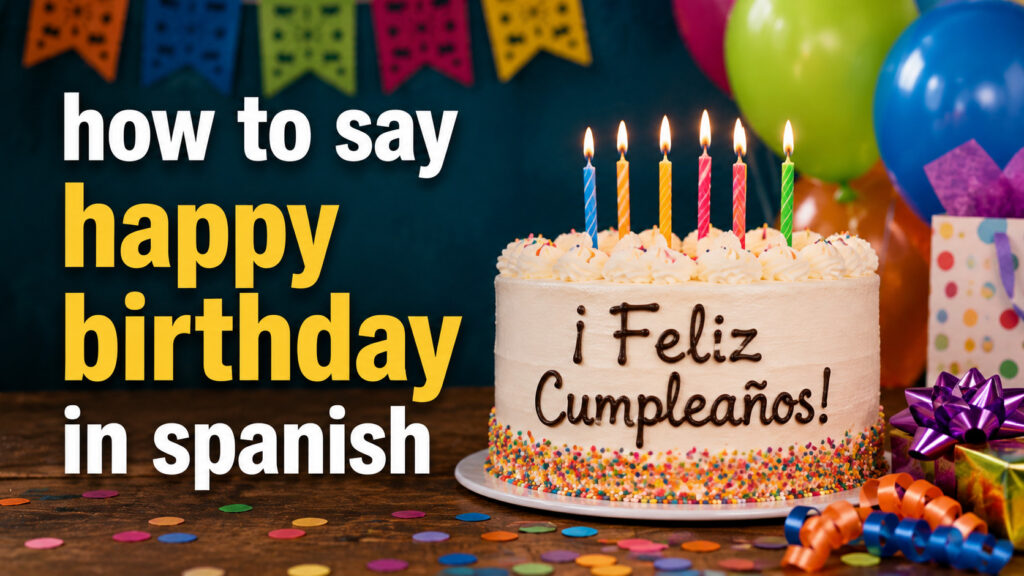
The most common way to say happy birthday in Spanish is “Feliz cumpleaños” (feh-LEES koom-pleh-AH-nyohs). This phrase combines “feliz,” meaning “happy,” with “cumpleaños,” meaning “birthday,” and is universally understood across every Spanish-speaking country. Unlike some other celebratory phrases, this expression does not vary much by region, making it a reliable and widely recognized greeting no matter where you are.
Pronunciation
Pronouncing “Feliz cumpleaños” correctly involves breaking it into clear parts: feh-LEES koom-pleh-AH-nyohs. “Feliz” is pronounced with the stress on the second syllable, LEES. “Cumpleaños” is a longer word, broken into koom-pleh-AH-nyohs, with the stress falling on the third syllable, AH. The “ñ” in “años” produces a distinct “ny” sound, similar to the “ny” in “canyon,” which is an important sound to master since it appears in many other common Spanish words as well.
Common Ways to Say It
While “Feliz cumpleaños” is the standard phrase, Spanish speakers often add extra warmth or emphasis. “Feliz cumple” is a shortened, more casual version commonly used among friends and family. “Que cumplas muchos más” translates to “May you have many more,” a phrase often added after the initial greeting to wish someone continued happiness in the years ahead. In some countries, singing “Las Mañanitas,” a traditional birthday song popular in Mexico and other parts of Latin America, is a common cultural addition to the celebration.
Formal and Informal Usage
“Feliz cumpleaños” works well in both formal and informal settings, making it a versatile phrase for nearly any relationship. The shortened “Feliz cumple” is more casual and best used with close friends or family members rather than in formal correspondence. For a more formal or respectful birthday message, such as one directed at a boss, elder, or someone you do not know very well, phrases like “Le deseo un feliz cumpleaños” meaning “I wish you a happy birthday,” using the formal “le,” add an extra layer of politeness and respect.
Related Phrases
A few related expressions can help you craft a more complete and heartfelt birthday message. “Que tengas un día maravilloso” means “May you have a wonderful day,” a warm addition to any birthday wish. “Espero que se cumplan todos tus deseos” translates to “I hope all your wishes come true,” a thoughtful phrase often used in cards or messages. “Muchas felicidades” means “many congratulations,” another common way to celebrate someone’s birthday, especially in written messages or cards.
Real-Life Examples with English Translations
Seeing these phrases in context can help you understand how they are used naturally. Here are a few examples:
“¡Feliz cumpleaños, Carlos! Espero que tengas un día maravilloso.” translates to “Happy birthday, Carlos! I hope you have a wonderful day,” a warm and friendly message suitable for a close friend.
“Le deseo un feliz cumpleaños y muchas felicidades.” means “I wish you a happy birthday and many congratulations,” a respectful and formal message appropriate for a colleague or elder.
“¡Feliz cumple! Que cumplas muchos más.” translates to “Happy birthday! May you have many more,” a casual and affectionate message often used among close friends or family.
Common Mistakes
One common mistake learners make is mispronouncing the “ñ” in “cumpleaños,” pronouncing it like a regular “n” instead of the distinct “ny” sound, which can make the word harder to understand clearly. Another frequent error is using the shortened “Feliz cumple” in formal written messages, such as professional cards or emails, where the full phrase “Feliz cumpleaños” would be more appropriate. Learners also sometimes forget to adjust for formality when writing to someone they do not know well, missing the opportunity to use more respectful phrasing like “Le deseo un feliz cumpleaños.”
Final Thoughts
Learning how to say happy birthday in Spanish is a simple yet meaningful way to celebrate someone’s special day and show genuine care. Whether you use the classic “Feliz cumpleaños,” the casual “Feliz cumple” among friends, or a more heartfelt addition like “Que tengas un día maravilloso,” understanding the tone and context behind each phrase will help your message feel personal and sincere. With a little practice, celebrating birthdays in Spanish will soon feel like second nature.