Picture yourself walking through a busy street in Cairo, and a shop owner tosses out a quick, friendly greeting before you even say a word. What did they just say, and how can you respond like a local? Egyptian Arabic is full of relaxed, everyday expressions, and learning how to say hi in Egyptian is one of the easiest ways to sound more natural and connect with locals right away.
This guide covers the meaning, pronunciation, and casual usage of Egyptian Arabic greetings so you can chat like a true Cairene in no time.
Meaning and Translation
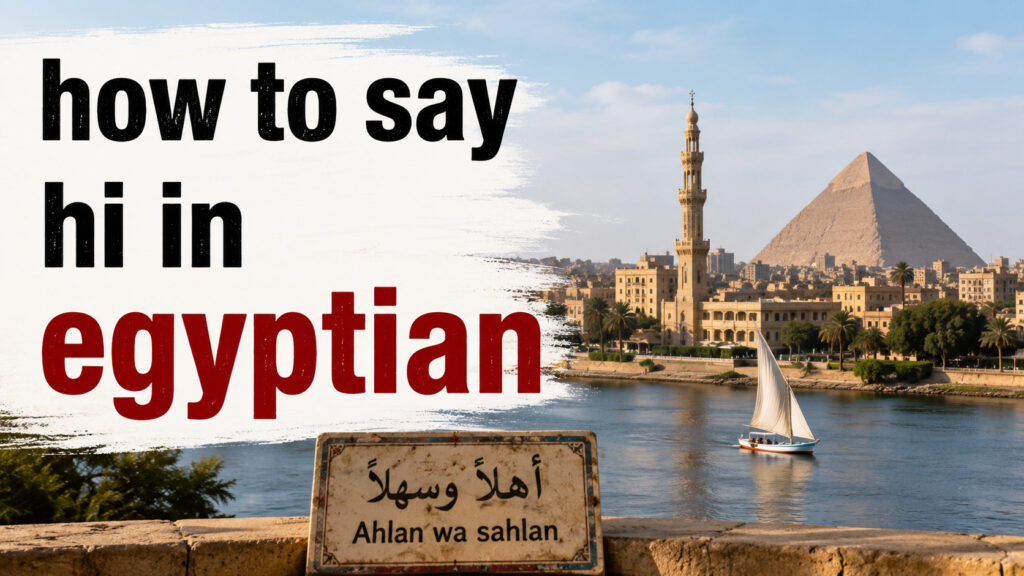
The go to casual way to say hi in Egyptian Arabic is أهلاً (Ahlan). This short, friendly word functions almost identically to “hi” in English and is used constantly throughout daily life in Egypt.
Another very casual and distinctly local option is إزيك (Izzayak), used when speaking to a man, or إزيك (Izzayik), used when speaking to a woman. While it technically translates to “how are you,” Egyptians use it interchangeably as a way to say hi, similar to how English speakers might say “hey, how’s it going” as a casual greeting rather than a literal question.
يا هلا (Ya Hala) is another relaxed, friendly greeting, especially common among younger speakers and in informal social settings, roughly equivalent to a cheerful “hey there.”
Pronunciation
Ahlan is pronounced “AH-lahn,” with a clear stress on the first syllable. It is short, simple, and one of the easiest Arabic words for beginners to say correctly on the first try.
Izzayak is pronounced “iz-ZAY-yak” for a man, and Izzayik is pronounced “iz-ZAY-yik” for a woman. The stress falls on the second syllable in both versions, and the difference between the two comes down to that final vowel sound, which reflects the gender of the person you are speaking to.
Ya Hala is pronounced “yah HAH-lah,” with a light, upbeat rhythm that matches its casual, friendly tone. Saying it with a bit of energy in your voice actually helps it sound more natural, since it is meant to feel warm and enthusiastic.
Common Ways to Say It
أهلاً (Ahlan) is the single most common and versatile way to say hi, used constantly in shops, among friends, and in nearly every casual interaction throughout the day.
إزيك (Izzayak) or إزيك (Izzayik) works as a friendly, familiar way to greet someone you already know, functioning as both “hi” and “how are you” rolled into one natural expression.
يا هلا (Ya Hala) is a fun, energetic alternative often heard among younger Egyptians or in relaxed social settings like cafes, gatherings with friends, or casual online chats.
أهلاً يا صاحبي (Ahlan ya sahby), meaning “hi my friend,” adds a personal touch and is a common way to greet someone you are close with.
Formal and Informal Usage
Since this guide focuses on casual greetings, it is worth noting that أهلاً (Ahlan) is unique in that it works well in both relaxed and slightly more formal situations, making it a safe default no matter who you are speaking to.
إزيك (Izzayak) and يا هلا (Ya Hala), however, are strictly casual and best reserved for friends, peers, classmates, or people close to your own age. Using these with an elder, a stranger in a formal setting, or a business contact you have just met can come across as overly familiar.
If you want to stay casual but slightly safer with someone you do not know well, sticking with a simple أهلاً (Ahlan) rather than إزيك (Izzayak) is a good middle ground, since it feels friendly without assuming a close relationship.
Related Phrases
تمام (Tamam) means “okay” or “great,” often used as a quick, casual response after a greeting.
كله تمام؟ (Kollo Tamam?) means “is everything good?” a common casual follow up question after saying hi.
يلا (Yalla) means “let’s go” or “come on,” a versatile word often used at the start or end of casual conversations.
باي (Bye) is commonly borrowed directly from English in casual Egyptian speech, used the same way as in English when parting ways.
إيه الأخبار؟ (Eh Al Akhbar?) means “what’s the news,” a relaxed way of asking “what’s up” among friends.
Real-Life Examples with English Translations
أهلاً, عامل إيه؟ (Ahlan, aamel eh?) Hi, how are you doing? (spoken to a man)
إزيك يا صاحبي, من زمان مشفتكش! (Izzayak ya sahby, min zaman mashoftakesh!) Hey man, I have not seen you in forever!
يا هلا! نورت المكان. (Ya hala! Nawwart el makan.) Hey there! You have brightened up the place. (a friendly, welcoming expression)
أهلاً, إيه الأخبار؟ (Ahlan, eh al akhbar?) Hi, what’s up?
إزيك يا جميلة, كله تمام؟ (Izzayik ya gamila, kollo tamam?) Hi beautiful, is everything good? (a warm, casual greeting between close friends)
Common Mistakes
One common mistake is using إزيك (Izzayak) with someone you have never met, especially in a professional setting, since this casual phrase assumes a level of familiarity that may not exist yet. Starting with أهلاً (Ahlan) instead is a safer first impression.
Another mistake is mixing up the masculine and feminine forms, saying Izzayak to a woman instead of the correct Izzayik. This gender distinction is a key part of Egyptian Arabic and is worth practicing early.
Some learners also assume every casual greeting works the same in every Arabic speaking country, but يا هلا (Ya Hala) and certain phrasing choices are distinctly Egyptian and may sound unfamiliar or slightly different in other Arabic dialects.
Finally, forgetting the upbeat, friendly tone that naturally comes with these casual greetings can make them sound stiff, even if the words themselves are correct. Egyptian Arabic greetings are often delivered with warmth and energy, so matching that tone helps you sound more natural.
Final Thoughts
Learning how to say hi in Egyptian is a fun and practical way to sound more like a local and connect with Egyptian friends, coworkers, or people you meet while traveling. With أهلاً (Ahlan) as your reliable everyday greeting and casual favorites like إزيك (Izzayak) and يا هلا (Ya Hala) in your back pocket, you will be ready to greet people the way locals actually do. Practice the pronunciation, bring a bit of warmth to your delivery, and you will find these small greetings open up big conversations.