
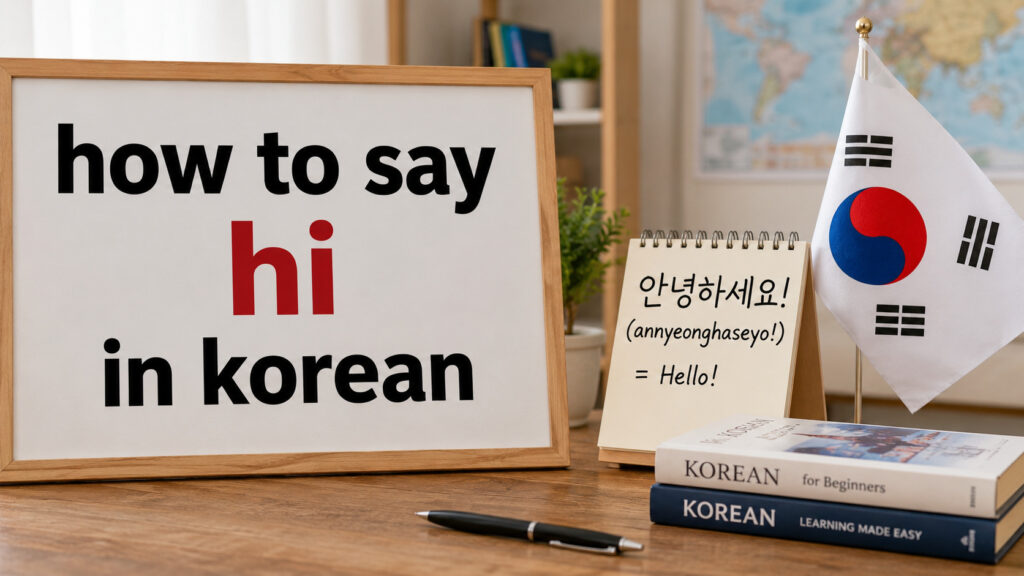
Have you ever watched a Korean drama or listened to K-pop and heard characters greet each other in completely different ways depending on who they are talking to? Korean is well known for its layered speech levels, and greetings are one of the clearest examples of this in action. Whether you are a K-drama fan, planning a trip to Seoul, or just starting your Korean language journey, learning how to say hi in Korean the right way for each situation will help you sound natural and respectful from day one.
This guide covers the meaning, pronunciation, and appropriate usage of Korean greetings so you always know which one to reach for.
Meaning and Translation
The most well known and widely used way to say hello in Korean is 안녕하세요 (Annyeonghaseyo). This phrase comes from the word 안녕 (annyeong), meaning “peace” or “wellbeing,” combined with a polite verb ending. Together, it carries a meaning similar to “are you at peace” or “are you well,” functioning as a polite, all purpose greeting.
For casual situations, Koreans simply say 안녕 (Annyeong), dropping the polite ending entirely. This shorter version means the same thing but is used exclusively among friends, peers, or people younger than or equal to you in age or social status.
Pronunciation
Annyeonghaseyo is pronounced “ahn-nyoung-hah-seh-yo.” The word breaks into five syllables, with a natural, even rhythm. The “eo” sound in Korean, as in nyeong and seyo, is pronounced like the “u” in “up,” an important sound to get right since it appears frequently in Korean vocabulary.
Annyeong, the casual version, is pronounced “ahn-nyoung,” simply dropping the final syllables of the longer, more formal greeting. This shorter version is quick and easy to say, making it a popular starting point for beginners learning casual Korean.
Korean pronunciation is generally consistent once you learn the sounds of Hangul, the Korean writing system, and practicing these two greetings is a great way to start building comfort with those foundational sounds.
Common Ways to Say It
안녕하세요 (Annyeonghaseyo) is the standard, most commonly used greeting across nearly all everyday situations, appropriate for strangers, coworkers, teachers, and people you are meeting for the first time.
안녕 (Annyeong) is the casual, shortened version used strictly among close friends, siblings, or people younger than you, making it one of the first casual greetings Korean learners pick up from music, dramas, or conversations with peers.
안녕하십니까 (Annyeonghasimnikka) is an even more formal version, often heard in news broadcasts, military contexts, or very formal business settings, though it is far less common in everyday conversation than Annyeonghaseyo.
여보세요 (Yeoboseyo) is a greeting used specifically when answering the phone, functioning similarly to “hello” in that narrow context but not used in face to face situations.
Formal and Informal Usage
안녕하세요 (Annyeonghaseyo) is the safest, most versatile choice for beginners, since it works politely in almost any situation, including with strangers, coworkers, teachers, or anyone older than you. This should be your default greeting until you are confident about the relationship and social context.
안녕 (Annyeong) is strictly informal and should only be used with close friends, younger siblings, or peers you already know well. Korean culture places significant importance on age and social hierarchy, and using this casual greeting with someone older or unfamiliar can come across as disrespectful.
For especially formal occasions, such as official ceremonies, the workplace hierarchy, or addressing someone with a much higher social status, 안녕하십니까 (Annyeonghasimnikka) shows an extra layer of respect, though Annyeonghaseyo remains appropriate and sufficiently polite for the vast majority of everyday interactions.
Related Phrases
만나서 반갑습니다 (Mannaseo Bangapseumnida) means “nice to meet you,” a polite phrase commonly used right after an initial greeting during introductions.
잘 지내세요? (Jal Jinaeseyo?) means “how have you been,” a polite follow up question after greeting someone.
안녕히 가세요 (Annyeonghi Gaseyo) means “goodbye,” said to someone who is leaving while you remain in place.
안녕히 계세요 (Annyeonghi Gyeseyo) also means “goodbye,” but is used when you are the one leaving while the other person stays.
이름이 뭐예요? (Ireumi Mwoyeyo?) means “what is your name,” a natural question following a greeting during an introduction.
Real-Life Examples with English Translations
안녕하세요, 만나서 반갑습니다. (Annyeonghaseyo, mannaseo bangapseumnida.) Hello, nice to meet you.
안녕! 오늘 뭐 해? (Annyeong! Oneul mwo hae?) Hi! What are you doing today? (spoken between close friends)
안녕하세요, 여기 자리 있나요? (Annyeonghaseyo, yeogi jari innayo?) Hello, is this seat available?
여보세요, 지민이에요. (Yeoboseyo, Jimin-ieyo.) Hello, this is Jimin. (used when answering the phone)
안녕하십니까, 오늘 회의를 시작하겠습니다. (Annyeonghasimnikka, oneul hoeuireul sijakhagesseumnida.) Hello, let us begin today’s meeting. (formal business context)
Common Mistakes
One common mistake is using the casual 안녕 (Annyeong) with someone older or in a professional setting, which can come across as impolite given how seriously Korean culture treats age and hierarchy in speech. Defaulting to Annyeonghaseyo until you know someone well is the safer approach.
Another mistake is mispronouncing the “eo” sound, often replacing it with a simple “o” sound instead of the correct “uh” sound, which can make words like Annyeonghaseyo harder for native speakers to recognize clearly.
Some learners also try to use 여보세요 (Yeoboseyo) in face to face greetings, when it is specifically reserved for phone conversations and would sound out of place in person.
Finally, forgetting the polite ending entirely in situations that call for it, such as dropping haseyo when speaking to a stranger or elder, is a frequent error among beginners still adjusting to Korean’s formality levels.
Final Thoughts
Learning how to say hi in Korean means understanding not just the words themselves, but also when each one is appropriate to use. With 안녕하세요 (Annyeonghaseyo) as your reliable, polite default and 안녕 (Annyeong) reserved for close friends, you now have a solid foundation for greeting people respectfully in nearly any Korean speaking context. Paying attention to formality and social context will help your greetings feel natural, appropriate, and genuinely well received.


