Ever noticed how asking someone how they are doing can set the entire tone of a conversation? In Spanish-speaking cultures, this simple question carries genuine warmth and is often more than just a passing formality. If you are learning how to say how are you in Spanish, this guide covers the meaning, pronunciation, and everyday usage of the most common phrases so you can connect with people naturally and respectfully.
Meaning and Translation
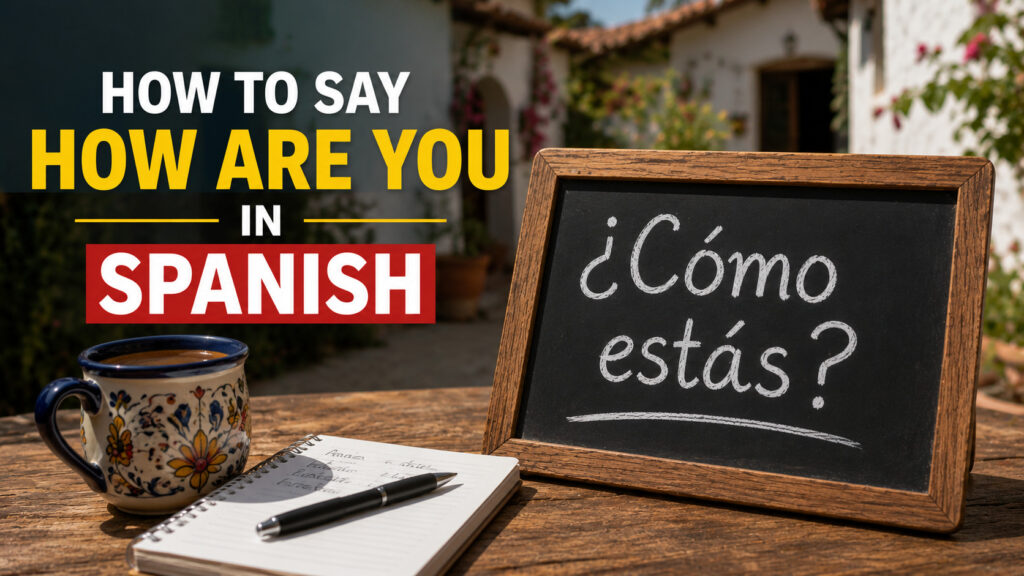
The most common way to say how are you in Spanish is “¿Cómo estás?” (KOH-moh ehs-TAHS). This phrase uses the informal “you” form and is widely used in everyday conversation. For a more formal version, Spanish speakers use “¿Cómo está usted?” (KOH-moh ehs-TAH oo-STEHD), which shows respect when speaking with someone you do not know well or someone older. Both phrases ask the same basic question but reflect different levels of familiarity.
Pronunciation
Pronouncing “¿Cómo estás?” correctly involves four syllables: KOH-moh ehs-TAHS, with the stress falling on the final syllable of “estás.” “¿Cómo está usted?” follows a similar pattern, with “usted” pronounced oo-STEHD, stress on the second syllable. The rolled or tapped “r” sound does not appear in these particular phrases, making them relatively approachable for beginners still building confidence with Spanish pronunciation.
Common Ways to Say It
Beyond the standard “¿Cómo estás?” Spanish speakers use several variations depending on region and context. “¿Qué tal?” is a shorter, more casual way to ask the same general question, similar to “How’s it going?” in English. “¿Cómo te va?” translates to “How’s it going for you?” and is common in everyday casual conversation. In some Latin American countries, especially Mexico, “¿Qué onda?” is a popular, very informal way to ask how someone is doing, often used among friends or peers.
Formal and Informal Usage
Spanish clearly distinguishes between formal and informal ways of asking how someone is doing. “¿Cómo estás?” is informal and appropriate for friends, family, classmates, or peers. “¿Cómo está usted?” is the formal version, best used with elders, strangers, or in professional settings, since it uses the respectful “usted” pronoun instead of the informal “tú.” “¿Qué tal?” and “¿Qué onda?” are even more casual and should be reserved for close friends or relaxed social settings rather than formal or professional interactions.
Related Phrases
A few related phrases can help you respond naturally once someone asks how you are doing. “Estoy bien, gracias” means “I’m fine, thank you,” a common and polite response. “Más o menos” translates to “so-so” or “more or less,” used when things are neither particularly good nor bad. “¿Y tú?” means “And you?” a natural way to return the question after answering. “Todo bien” means “everything’s good,” a simple and casual way to respond in everyday conversation.
Real-Life Examples with English Translations
Seeing these phrases in context can help you understand how they are used naturally. Here are a few examples:
“¿Cómo estás? Estoy bien, gracias.” translates to “How are you? I’m fine, thank you,” a simple and common exchange between friends.
“¿Cómo está usted, señora López?” means “How are you, Mrs. López?” a respectful and formal way to greet an older person or someone you do not know well.
“¿Qué tal? Todo bien por aquí, ¿y tú?” translates to “How’s it going? Everything’s good here, and you?” a relaxed and casual exchange between peers.
Common Mistakes
One common mistake learners make is using the informal “¿Cómo estás?” with someone who expects a more respectful “¿Cómo está usted?” such as an elder or a stranger, which can come across as too casual. Another frequent error is forgetting to respond and return the question, since simply answering without asking “¿Y tú?” or “¿Y usted?” in return can feel abrupt in Spanish-speaking cultures where the exchange is often expected to go both ways. Learners also sometimes confuse “¿Cómo estás?” with “¿Cómo eres?” which actually asks about someone’s personality or characteristics rather than their current state of being.
Final Thoughts
Learning how to say how are you in Spanish is a simple but meaningful way to show genuine interest in the people you are speaking with. Whether you use the everyday “¿Cómo estás?” with friends or the respectful “¿Cómo está usted?” in formal settings, understanding the context behind each phrase will help you communicate naturally and warmly. With a little practice, this small but important question can help you build more genuine connections in Spanish conversation.