Ever caught a phrase in a Spanish movie or song that clearly meant “be quiet” but wasn’t quite what you expected? Spanish has several ways to tell someone to be quiet, ranging from playful to blunt to outright rude. If you are learning how to say shut up in Spanish, this guide breaks down the most common expressions, their tone, and when it is appropriate to use them so you can understand and use this phrase responsibly.
Meaning and Translation
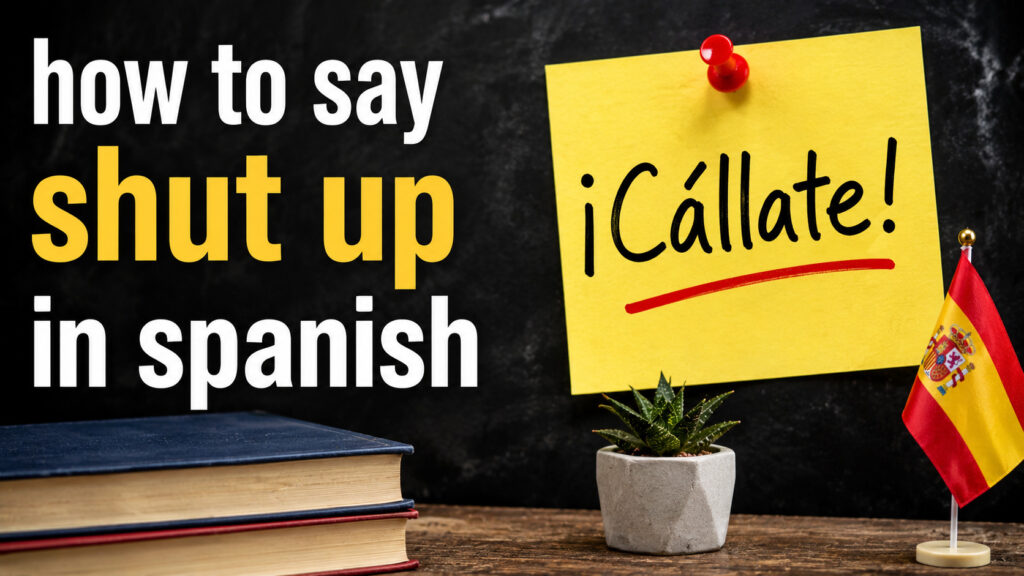
The most direct translation of “shut up” in Spanish is “Cállate” (KAH-yah-teh). This is a command form of the verb “callarse,” meaning “to be quiet” or “to hush.” A softer and more polite alternative is “Silencio, por favor,” meaning “Silence, please.” A blunter and ruder version, often used in frustration or anger, is “Cállate la boca,” which intensifies the command by literally referencing “the mouth.” Understanding the tone behind each phrase is essential before using it in conversation.
Pronunciation
Pronouncing “Cállate” correctly involves three syllables: KAH-yah-teh, with the stress on the first syllable. The double “ll” in Spanish is typically pronounced like a “y” sound in most dialects, so “cállate” sounds like “KAH-yah-teh” rather than “KAHL-lah-teh.” “Silencio” is pronounced see-LEHN-see-oh, with the stress on the second syllable. Practicing these words slowly will help you understand them clearly when you hear them, even if you choose not to use the ruder versions yourself.
Common Ways to Say It
Spanish offers a range of expressions depending on how strongly you want to communicate the message. “Cállate” is the standard, direct command. “Cállate la boca” is more forceful and can come across as rude or aggressive. “Ya cállate” adds urgency, roughly meaning “just be quiet already.” On the softer end, “Shh” or “Silencio” are much gentler ways to ask for quiet without sounding confrontational, often used by teachers, parents, or in polite public settings like libraries.
Formal and Informal Usage
“Cállate” is inherently informal and can sound rude or harsh depending on tone, relationship, and context, so it should generally be avoided with strangers, elders, or in professional settings. There is no polite or formal version of “shut up” in Spanish, since the phrase itself is inherently blunt. Instead, in formal or respectful situations, Spanish speakers use alternatives like “Silencio, por favor” or “¿Podría guardar silencio?” meaning “Could you please be quiet?” These softer options are far more appropriate when addressing someone you do not know well or in professional and educational environments.
Related Phrases
A few related expressions can help you understand this topic more fully. “Guarda silencio” means “keep quiet” and is a more neutral, less aggressive alternative. “No hables” means “don’t speak,” a direct but less harsh command. “Basta” means “enough” or “stop,” often used to interrupt an ongoing conversation or argument. Knowing these variations helps you recognize the full range of tone options, from firm but polite to blunt and confrontational.
Real-Life Examples with English Translations
Seeing these phrases in context can help clarify when and how they are used. Here are a few examples:
“¡Cállate! No puedo concentrarme.” translates to “Shut up! I can’t concentrate,” an informal and somewhat frustrated command between close friends or siblings.
“Silencio, por favor, la película está por comenzar.” means “Silence, please, the movie is about to start,” a polite request appropriate in a public setting like a theater.
“¿Podría guardar silencio, por favor?” translates to “Could you please be quiet?” a respectful way to ask a stranger or coworker to lower their voice.
Common Mistakes
One common mistake learners make is using “Cállate” in situations that call for politeness, not realizing how harsh or rude it can sound to native speakers, especially with people they do not know well. Another mistake is assuming all forms of “shut up” carry the same weight, when in reality “Cállate la boca” is noticeably more aggressive than the simple “Cállate.” Learners should also be cautious about using this phrase at all in unfamiliar social settings, since tone, relationship, and context matter greatly in Spanish-speaking cultures, and a softer request for silence is often the more appropriate and respectful choice.
Final Thoughts
Learning how to say shut up in Spanish is useful for understanding conversations, media, and casual speech, but it is a phrase that calls for careful judgment in real-life use. While “Cállate” is the direct translation, softer alternatives like “Silencio, por favor” are almost always the better choice in respectful or unfamiliar settings. Understanding the tone and context behind each expression will help you use Spanish thoughtfully and appropriately in any situation.