Ever tried to describe your daily walk to a Spanish-speaking friend and paused because you were not sure which word to use? Spanish offers a few different ways to talk about walking, and picking the right one depends on context and tone. If you are learning how to say to walk in Spanish, this guide covers the meaning, pronunciation, common uses, and real examples so you can talk about walking naturally in everyday conversation.
Meaning and Translation
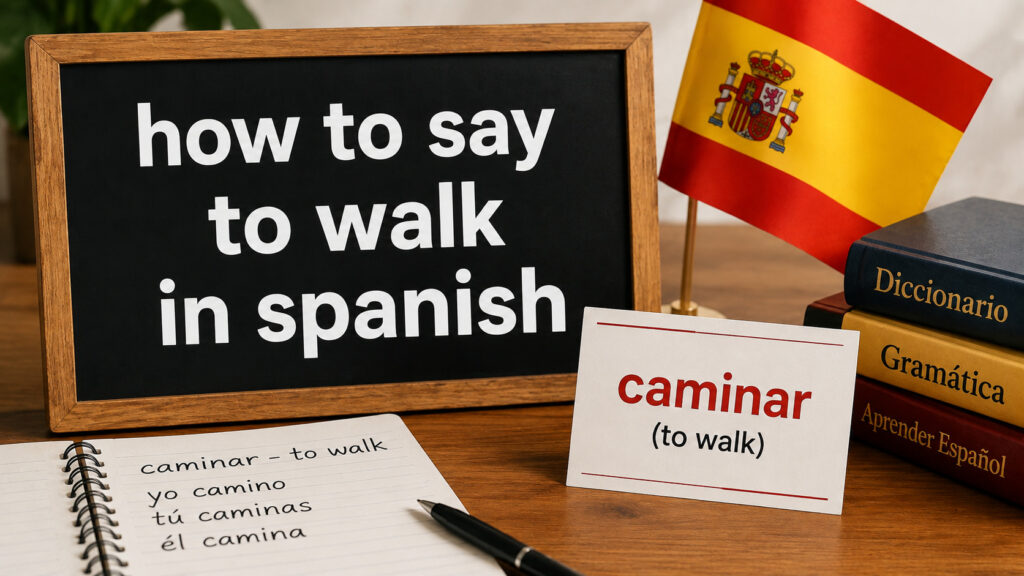
The most common Spanish verb for “to walk” is “caminar” (kah-mee-NAHR). This verb describes the general action of walking, whether it is a stroll around the neighborhood or a longer walk for exercise. Another verb often used interchangeably is “andar” (ahn-DAHR), which also means to walk but can carry a slightly broader sense of moving or getting around. Both verbs are widely understood across Spanish-speaking countries, though “caminar” is generally the more specific and commonly taught term for the physical act of walking.
Pronunciation
Pronouncing these verbs correctly will help you sound more natural in conversation. “Caminar” breaks down into four syllables: kah-mee-NAHR, with the stress on the final syllable, “NAHR.” “Andar” is pronounced ahn-DAHR, with the stress also falling on the last syllable. Spanish stress patterns often fall on the final syllable for verbs ending in “ar,” so keeping that rhythm in mind will help you pronounce similar words correctly as you continue learning.
Common Ways to Say It
Beyond the base verb, Spanish speakers use different conjugations depending on who is doing the walking and when. “Yo camino” means “I walk,” while “Él camina” means “He walks.” For talking about a walk in progress, Spanish speakers often say “Estoy caminando,” meaning “I am walking.” To describe a walk taken in the past, you might hear “Caminé al parque,” meaning “I walked to the park.” Learning these basic conjugations will let you talk about walking in the present, past, and ongoing tenses.
Formal and Informal Usage
The verb “caminar” itself does not change based on formality, but the way you address someone does. In casual conversation with friends or family, you might say “¿Caminas conmigo?” meaning “Do you walk with me?” using the informal “you” form. In a more formal setting, such as speaking with someone you do not know well or an older person, you would use “¿Camina usted conmigo?” which uses the formal “usted” form. This distinction is common across many Spanish verbs and is worth practicing as you build fluency.
Related Phrases
A few related expressions can help you talk about walking in more specific ways. “Dar un paseo” means “to take a walk” or “to go for a stroll,” often used in a more relaxed, leisurely sense. “Caminar rápido” means “to walk fast,” while “caminar despacio” means “to walk slowly.” “Salir a caminar” translates to “to go out for a walk,” a common phrase used when talking about exercise or daily routines. These phrases add nuance to your vocabulary beyond the basic verb.
Real-Life Examples with English Translations
Seeing these words in context makes them easier to remember and use. Here are a few natural examples:
“Todos los días camino treinta minutos.” translates to “Every day I walk for thirty minutes,” a common way to describe a daily habit.
“¿Quieres dar un paseo por el parque?” means “Do you want to take a walk in the park?” a friendly way to invite someone for a stroll.
“Ayer caminamos hasta la playa.” translates to “Yesterday we walked to the beach,” a simple example of describing a past activity with friends or family.
Common Mistakes
One common mistake learners make is confusing “caminar” with “andar,” assuming they are always interchangeable, when in some regions “andar” can imply a broader sense of movement rather than the specific act of walking. Another frequent error is forgetting to conjugate the verb correctly based on the subject, such as saying “yo caminar” instead of “yo camino.” Learners also sometimes mix up “caminar” with “caminata,” which is a noun meaning “a walk” or “a hike,” rather than the verb itself. Paying attention to these differences will help your Spanish sound more accurate and natural.
Final Thoughts
Learning how to say to walk in Spanish opens the door to describing a simple but common daily activity with confidence. Whether you use “caminar” for a straightforward walk or add phrases like “dar un paseo” for a more relaxed tone, understanding the verb and its conjugations will help you communicate clearly in everyday situations. With regular practice, talking about walking in Spanish will start to feel completely natural.