
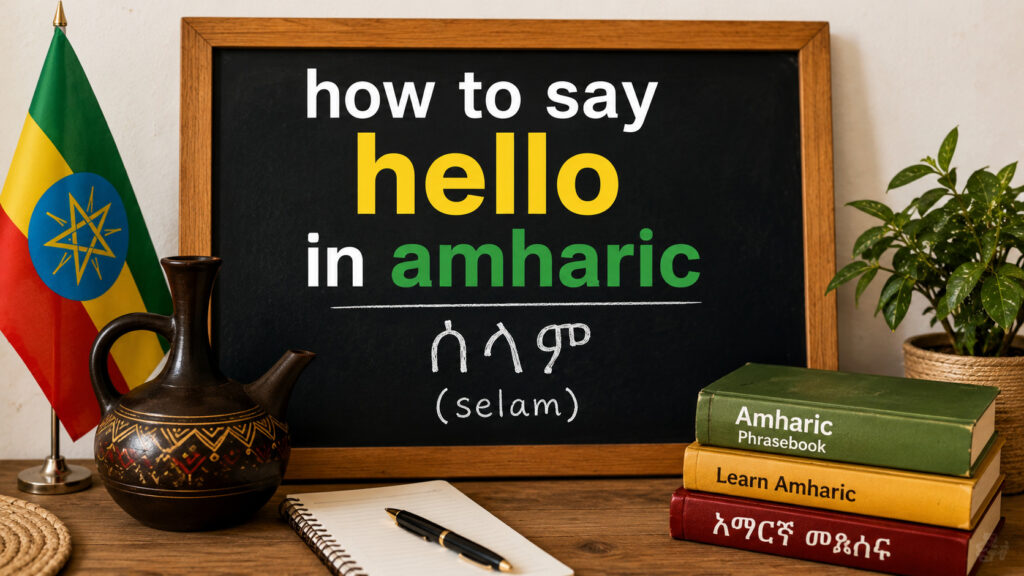
Did you know that Amharic uses its own unique writing system, called Ge’ez script, completely different from the Latin alphabet used in English? As the official language of Ethiopia and one of the most widely spoken languages in East Africa, Amharic offers a rich greeting culture that reflects warmth and respect. If you have Ethiopian friends, coworkers, or are planning a trip to Ethiopia, learning how to say hello in Amharic is a wonderful place to begin.
This guide breaks down the meaning, pronunciation, and everyday usage of Amharic greetings so you can start conversations naturally and respectfully.
Meaning and Translation
The most common way to say hello in Amharic is ሰላም (Selam). This word carries a beautiful dual meaning, translating to both “hello” and “peace,” similar to how shalom functions in Hebrew or salaam in Arabic. Selam is a warm, universal greeting used throughout Ethiopia regardless of the time of day.
Another common greeting is ጤና ይስጥልኝ (Tena Yistilign), which literally translates to “may health be given to me.” While the direct translation sounds unusual in English, this phrase functions as a polite and respectful way to say hello, particularly in more formal situations.
Pronunciation
Selam is pronounced “seh-LAHM,” with the stress falling on the second syllable. The “s” sound is soft and clear, and the word flows smoothly, making it one of the easiest Amharic words for beginners to pick up quickly.
Tena Yistilign is pronounced “TEH-nah yis-TIL-ing.” This phrase is longer and slightly more challenging, with four syllables spread across two words. Breaking it down slowly, “teh-nah” followed by “yis-til-ing,” will help you build up to saying it smoothly and naturally.
Amharic has some sounds that do not exist in English, including certain ejective consonants, but neither Selam nor Tena Yistilign requires these more difficult sounds, making both greetings approachable for new learners.
Common Ways to Say It
ሰላም (Selam) is the most versatile and commonly used greeting, appropriate for nearly any situation, from casual encounters with friends to general daily interactions.
ጤና ይስጥልኝ (Tena Yistilign) is used when addressing one person and is considered a more formal or respectful greeting, often directed toward elders or people you are meeting for the first time.
When greeting more than one person, the phrase shifts slightly to ጤና ይስጥልያችሁ (Tena Yistiliachihu), adjusting the ending to reflect a plural audience.
Dehna neh, used when speaking to a man, or Dehna nesh, used when speaking to a woman, both mean “are you well” and often follow directly after an initial greeting like Selam, functioning similarly to “how are you” in English.
Formal and Informal Usage
ሰላም (Selam) works comfortably in almost every setting, whether casual or formal, which makes it the safest and most flexible greeting for beginners to rely on. It is commonly used among friends, family, coworkers, and even strangers.
ጤና ይስጥልኝ (Tena Yistilign) leans more formal and respectful, often used when greeting elders, teachers, religious figures, or someone in a professional context. Using this phrase shows a clear intention to be polite and courteous.
In everyday casual conversation, Ethiopians frequently combine Selam with a follow up question like Dehna neh or Dehna nesh, creating a natural, friendly exchange similar to saying “hi, how are you” in English. In more formal settings, sticking with Tena Yistilign alone, without the more casual follow up, is often considered appropriately respectful.
Related Phrases
እንደምን አደርክ (Endemin Aderk) means “good morning” when speaking to a man, while እንደምን አደርሽ (Endemin Adersh) is used when speaking to a woman.
አመሰግናለሁ (Amesegenalehu) means “thank you,” a useful phrase to pair with any greeting.
ደህና ሁን (Dehna Hun) means “goodbye” when speaking to a man, and ደህና ሁኚ (Dehna Huni) is the version used when speaking to a woman.
እሺ (Eshi) means “okay” and is frequently used in casual conversation to acknowledge or agree with something.
ስም (Sim) means “name,” often used shortly after a greeting when asking someone’s name during an introduction.
Real-Life Examples with English Translations
ሰላም, ደህና ነህ? (Selam, dehna neh?) Hello, are you well? (spoken to a man)
ሰላም, ደህና ነሽ? (Selam, dehna nesh?) Hello, are you well? (spoken to a woman)
ጤና ይስጥልኝ, እንዴት ነዎት? (Tena Yistilign, endet noyot?) Hello, how are you? (formal, respectful tone)
ሰላም ለሁላችሁም! (Selam le hulachihum!) Hello everyone!
ጤና ይስጥልኝ አቶ አበበ. (Tena Yistilign Ato Abebe.) Hello, Mr. Abebe.
Common Mistakes
One common mistake is using Tena Yistilign in every situation, including very casual ones, which can sound overly formal or stiff among friends. Reserving this phrase for more respectful or formal contexts and using Selam in casual settings creates a more natural balance.
Another mistake is forgetting that Amharic greetings often change based on the gender of the person being addressed, such as with dehna neh versus dehna nesh. Paying attention to this distinction helps avoid small but noticeable errors.
Some learners also mispronounce Selam by placing equal stress on both syllables instead of emphasizing the second syllable, which can make the word sound slightly unnatural to native speakers.
Finally, assuming Amharic greetings function exactly like English ones can lead to confusion, since phrases like Tena Yistilign carry cultural and linguistic nuance, such as its literal meaning of wishing health upon someone, that does not translate directly into a single English equivalent.
Final Thoughts
Learning how to say hello in Amharic opens the door to genuine, respectful connections with Ethiopian friends, coworkers, and communities. With ሰላም (Selam) as your flexible, everyday greeting and ጤና ይስጥልኝ (Tena Yistilign) for more formal occasions, you now have the foundation to greet people naturally and appropriately. Practice the pronunciation, pay attention to context, and you will find that even a simple hello can leave a lasting, positive impression.


